|
| Source |
I love this movie and for the longest time, I couldn't exactly put my finger on why.
I rewatched it as a part of fellowship, the sharing with a community of artists, and I think I finally figured it out:
The trolls are not the monster.
Trolls:
So we start the entire experience following an amateur Norwegian film crew attempting a big scoop for their university.
They are plucky, young, and nervous: you know...the audience.
So they go through the gorgeous Norwegian countryside in search of a bear poacher, which they establish early on is a very bad thing.
The kids follow a man called Hans (bear poacher) as he goes deeper and deeper into the wilderness only to discover he is out hunting trolls.
This is about thirty minutes into the movie and we haven't seen anything yet.
No jump scares.
Not a damn thing.
And around this point my inebriated compatriots are just about ready to turn this film off and why aren't we watching something else god bless it?!
And then this happens...
And the entire game changes!
Suddenly there is action and desperation and a really well done transformation scene I was not expecting from a B sci-fi flick.
Suddenly we are excited to see what happens next.
Well, the kids follow Hans after that and start believing him, which leads us to our next bit:
The Hunters:
This is Hans.
And he has been doing this job for too long.
He reveals that there are different types of trolls and they cause all kinds of problems, but ultimately, they are just animals.
Animals with a lot of aggression and life span, but animals still.
He is a bully.
A redeemable bully, but any one who goes into a tunnel system and murders dozens of troll mothers and children and fathers for an underground train is not a nice guy.
And he knows it.
Suddenly, we start seeing the truth of the movie:
The trolls are not the monster.The bureaucracy is the real monster.
It is the cold, calculated, almost farcical cover up of a breed of animal that nobody believes exists, but is absolutely willing to exploit.
Things like a bear cover up:
 |
| Source |
Where government officials bribe a Polish paint delivery company to shoot a bear and smuggle it across borders and deposit it on the site of a rampaging troll to hide the mess.
Here are the Polish bear hunters on the issue:
It is absolutely preposterous!
The trolls are not the monster! The bureaucracy is the monster here.
The Team.
But, the story keeps devolving.The kids have the footage; they can go public any time they want.
The cinemotographer (Tomas Alf Larsen) wants to turn back.
Tomas (Glenn Erland Tosterud), the reporter wishes to press forward.
Johana (Johanna Morck) wants to stay together.
They all follow along with the ride to see where it all leads...
It does not end well.
The kids are way out of their depth.
However, they follow behind Hans (Otto Jespersen) with full faith that he will lead them right.
They end their story on the side of the frozen wastes high in the Norwegian wilderness.
And there they meet the mighty Jotnar:
 |
| Source |
Suddenly, we believe that we are justified in our original feelings toward the trolls.
This thing needs to be put down.
And why?
Because it is killing things, driving the other creatures away: the other trolls, you know the good ones.
See it is usually at this point I check out of films.
Films like:
Warm Bodies that explore this Us vs. Them mentality often have a simple solution.
Here we have the protagonist white male character in "R" and his inexplicably relateable zombie cohorts:
Zombies! (people)
 |
| Source |
Next up:
Humans! (other people)
 |
| Source |
They have a military fetish and big guns and blowhard attitudes, so we do not like them at the start, but our protagonist does.
We will inevitably come to understand and respect their ways or they ours because hey, they look like us.
The Lovers (they're people too!)
 |
| Source |
Simple...
By introducing someone worse than both:
The Boneys (the real zombies)
 |
| Source |
They don't talk like we do.
They don't look like we do.
They are scary and mean and I hate them and why don't they all just go ahead and die already!
That is the argument of the movie.
Accept the other.
Love the other.
That is how love springs.
But, not too other.
Those guys are weird and still deserve to die.
If you are wondering why this sounds familiar, this structure is used in a bunch of films.
So I assumed it would apply to Trollhunter.
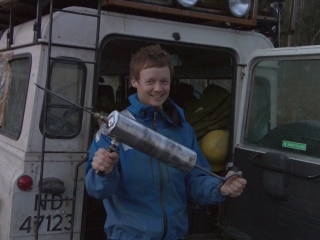
The Kids (our people)
 |
| Source |
These guys are sweet and nerdy like me, I like them and want them to succeed.
The Trolls (the other people)
 |
| Source |
I can't hate them.
The Lovers (they're people too)
 |
| Source |
How will their love work?!
Simple, by introducing a bigger, scarier troll:
The Jotnar (the real troll)
 |
| Source |
Except it wasn't.
It wasn't that way at all.
See...it has rabies.You heard that right rabies.
The Jotnar is a rabid animal.
And they put it down.
And Tomas and company are there to witness every moment of it.
At this point in the film everybody tends to get real quiet.
The humans survive, there are more scuffles that happen.
The rest of the plot, an abrupt edit, some attempt at credits.
But, for me, where this film really shines is the idea that the simplest answer isn't quite right.
See, I would maintain that
The humans are the "Other"
&
The trolls are the "People"
No other movie has so successfully masked the idea that the monster we are chasing the entire time are the ones holding the camera.
At no point in The Blair Witch Project do the kids put down the camera and think:
"Maybe we are just terrorizing an old lady in the woods."That just doesn't happen in modern horror.
Trollhunter may be a mockumentary making fun of the documentary style of films like The Blair Witch Project as Roger Ebert maintains.
But, I must disagree entirely with his assessment that this film is designed to make light of the genre and therefore, does not fail as a comedy, but succeeds as a tragedy.
This film is about extinction.
This film is about the horror of what we do to the planet and how ignorant we all are and how ignorant we are kept by bureaucracy.
I sincerely hope you will take my recommendation and watch it.
It's available on Netflix for pity's sake.
Conclusion
Trollhunter is a horror film in its truest sense.
Many horror films rely on a monster, an "other".
This character is removed from us by things like:
Death as in the case of The Unborn
or
Belief as in the case of The Exorcist
or
Understanding as in the case of The Poltergeist
These movies (some of them timeless classics) can be distilled down to a single moment or event or person or thing.
That is okay, sometimes that is good story telling as in the case of Bram Stoker's Dracula or Mary Shelley's Frankenstein.
However, movies like Stanley Kubrick's The Shining can aim at a certain feeling and provoke something deeply internal within all of us.
The atmosphere and the sense of a thing disturbs us more than anything.
We are presented with genuinely unknown and unknowable factors that drive us to despair.
That is true fear and true horror.
That is true fear and true horror.
Movies like The Shining do not rely on jump scares for their ability to inspire horror.
Instead, they rely on carefully crafted methods of disturbing or displacing the observer.
Dramatic shifts in camera or sound create dissonance with the mundane nature of the present moment.
Ultimately, it boils down to an atmosphere and a writing style that provokes deep internal distress.
I do not think that Trollhunter lives up to The Shining.
However, I do wish to contend that it is in a similar class or genre of film.
Where horror is treated as it is in life: a thing ultimately unknowable and unappreciated upon first viewing, but is deeply unsettling and causes inner strife.
The trolls are not the enemy, but neither are the people.
The truest enemy of people and troll population is a bureaucratic establishment that is sprawling and impossible to contend with.
It drives and forces everyone to do what they do for things like salary or compensation or prize money, but punishes the troll community at every turn and by extension, their human oppressors.
This is the main tension of the film that is ultimately unresolved.
Hence, my unease.
Hence, my horror.