Showing posts with label Vaudeville. Show all posts

Saturday, June 18, 2016

Best First Day & Hogtied by Children (What is Busking?)

Today, let us talk about busking:


What is busking?
According to Merriam Webster:
A person who entertains in a public space for "donations" [quotations added for ironical effect]
A bit too clinical, but it gets the point across.
I prefer this...

According to Dictionary.com:
  1. To make money by singing, dancing, acting, etc in public places in the hopes of "donations"
  2. To sell articles/obscene ballads, perform music, or improvise in a theatre queue in the hopes of "donations"
  3.  Buscare (Italian): to procure, get, gain; Buscar (Spanish): to look for, to seek
  4.  To "cruise as a pirate"
So we perform in the hopes of donations.
According to this definition, we possibly started in theatre queues while people were waiting for their tickets or for the house to open.
Performers would entertain and hope for patronage.
My personal favorite is to cruise as a pirate. This may be the origin of working on cruise lines, entertaining as a profession on ships.

The biggest things these definitions have in common:

  1. In Public 
  2.  Performance
  3. Hope
  4. "Donations"
But what is busking really?
I didn't really know until I performed.
Try it!

Public

So what do we mean by public?
Well...public.
It can be literally anywhere.


I have seen performers in almost any setting.
Now, for it to be legal, certain restrictions should be observed.
For example, one of my friends invited me to come with him to New York, spend a day with him on the subway, asking for donations while we perform scenes from contemporary plays for the waiting audience.
This sounded like a lot of fun...

(Excuse me! Ladies and Gentlemen! May I have your attention? Please!) 

Until I rode a subway and realized that that was inappropriate as fuck.
People on subways just want to get home. Or to work.
They are unphased by panhandlers and solicitors.
And what is more, it is illegal to do on public transit.


Now, that being said, you can do it in places of public transit and meeting, like this train station and net a tidy sum if you are particular about what you perform.

Performance

What type of performance should busking be?
If you believe the dictionaries, it almost always comes down to music.
But it could be...

Whatever this guy is doing. Zyle? Can you help me out?


Weight sharing


A quartet (with an mother-flipping accordion!)


Circus


Unicycling


Traditional dance


Point being. 
It can be anything.
Anything that you desire your street performance to be.
Busking is flexible enough to cover pretty much all of it.

Hope

I leave this one to people far better equipped than I.

"Donations"

I dislike this word.
Mostly because donations
The act of giving to a charity, especially a sum of money
It equates performance with charity
PERFORMANCE IS NOT CHARITY.
Therefore, why would you donate to one?
PERFORMANCE IS A JOB. IT IS A CAREER.
Plenty of people make wildly successful careers off their performance and their art.


Amanda Palmer survives on people giving to her on a monthly basis.
Check out her Patreon here.


Or Beyonce?
Quick price search of her tickets is wow!
$114-2700
at the time of this article.
Do you consider that a donation to the Beyonce charity?
Some people would argue hers is a religious experience, so the case could be made, but I do not consider it charity.
Beyonce has worked and hustled hard and found overwhelming success.
So no. Not charity.
And not donations.

Patronage

Patronage is 
support given by a patron
What is a patron?
someone who gives support to an institution, individual, or artist.
It doesn't have to be in arts.
The sciences have patrons all of the time.
They often thank them for their kind donations.
And that is fine.
Some people don't have the dislike of the word that I do.
But, I prefer patronage.
The financial support of persons who appreciate what artists do and wish to see them succeed at this crazy little thing called art.

That is the lifeblood of busking.
Patronage.
This is what lets people make careers out of it.
And it all starts with the hat.


Or guitar box.
Those also seem to be super common.


Point being, there is some way to receive patronage.
And the art is what is given back.
And often a thank you.
There is often something intangible about art. 
It is ephemeral, hard to pin down, difficult to figure out.

It is easiest when something tangible exchanges hands. 
A CD, a painting, a sculpture, a sketch.
When these pass to people, they are able to give immediately.
Oh, the CD is five quid? Sure, I'll take two, give one away as a gift.
It becomes a simple, monetary transaction.
I give you goods, you give me money.

But, busking and performance is harder because it is performative.
No goods exchange hands.
So it becomes a little bit scary when your busker looks like this:


See! There is the chalice! Go drop in the dollar bill so he can pay rent this month.
And there is no goods that can exchange hands at the end of the performance (like a CD)
Yeah...
So it becomes just a little bit thornier.

Point being, it is a scary prospect to stop and watch a busker perform.
It can be scarier to donate because it is such a new and wondrous thing.
  • This person is asking for money simply for performing?
  • She isn't donating to a good cause?
  • She isn't starving?
  • She isn't telling me about how her mom is in the hospital and if only she could get on the bus?
  • What is this remarkable event?
Performance.
We're poor as dirt, but we have dignity.


Well...some of us do.
Point being, I promised I would bring it up and I will.
There is this video.

Playing a Stradivarius. 
In DC Metro.

The Argument

  1. He is one of the preeminent musicians of our generation
  2. performing six Bach pieces over 45 minutes
  3. The equivalent of what people could expect to pay hundreds in a concert hall
  4. He performed for FREE 
  5. Only 7 people stopped to listen
  6. 2 donations of a dollar
THE UNCULTURED SWINE.

I refute this.
Amanda Palmer in her Art of Asking says look at the relationship differently, and from a busking scenario you have to.
Joshua Bell, with all due respect, has illustrated in one act, what I learned from a single performance of busking.
I imagine he learned it too.

What I learned from busking.

You have to earn your audience.

So I am from a classical acting background. 
Which is a bit of an institution. 
The audience, like cattle, are corraled into a seated posture, facing the stage. The lights are dimmed and they are forced to stare at the only illuminated part of the stage. The actors are presented. And we beg the audience not to use cell phones as it may distract from the art. It is a little...prepared. A little...full of rigor...rigor-ful? 
Looks like this:


Now, this is not every theatre, but for the sake of time, let us say that it is.
Classic performance models will almost always adhere to this rigid structure.

Now, busking is a public performance model.
So crowds can come at you from almost any angle.
This can be purely physical (it rarely is)


More likely it will include an emotional aspect (look how happy everyone is on their way to work)


It can even be openly hostile (GET A REAL JOB!)


These can be extreme examples.
But, if you are willing to take a little eyebrow raises, a few heckles, a few shouts you can really command an audience.
Either through silence (mime) or through presence (dance) or through good old fashioned soundscape (barker).
If you have a routine or something remarkable, something people are willing to watch or find genuinely joyful you can turn the tide of the physical/emotional landscape to one of wonder and/or compassion.


If you are telling a story, people may even route for you.


That sounds nice.
But, more commonly you will have to deal with this:


The backs of heads.
Because...

Your relationship is only temporary

As good as you may be, as good as the performance is, you are performing in a public place.
That means that people will come and see you perform.
They will enjoy it for however long they have time.
And then they leave.

This is one of the harder ones to deal with.
The rejection.
Except it isn't. 
Because people do not have time to stay does not mean that they don't have time for you.
And it does not mean that you have to pull them back in.
It isn't a commentary on your performance or your self-worth if people leave.
That is just the nature of the beast.

When you have an audience, keep the audience

Meaning, unless you have a remarkable act, in between the sets is where it gets dangerous for audience attendance. 
Particularly for my performance, which we will get to in just a moment.
See, people's time and money is valuable.
It should be treated as such and
I believe performers do honor that value.
However, when you are setting up, moving between acts, or otherwise crunched for time:
Audience attention wanes.
And it wanes fast. 
So after the dancers would end their fabulous performance and the sound system was getting broken down and I was setting up to go on, people would leave.
That big, healthy audience we had built would disperse. 
I didn't take it personally, but suddenly I realized I would be playing to this:


This scared me.
To no end. 
Because, I have only ever had audiences come see me.
I have never had to drudge up an audience.
New skill set!
This is where Joshua Bell and myself fall flat on our faces:
We have never had to create our own audience. Therefore, we have none of those skills in our artistic toolbox at the ready.

What I did on my first day busking

I did what anybody in my position would do.
I started barking.
I think I did a literal "Hear ye, hear ye" I kind of blacked out for a minute there.
I asked everyone to applaud for the wonderful dancers and then wait a moment while I steeled myself for a presentation of what I called
FIRST DAY.
Why did I call it that?
Because it was my first day.
And I was terrified.
I knew of only one other scenario that was like that.
School.

Doesn't matter what school you go to.
Doesn't matter what age.
First days are awkward.
They are about making friends and making them fast.
So you are willing to do anything to try anything.
So that is what I did. And I decided to perform it.

Give yourself permission to play

Really I needed that more than anything.
I needed time and space to play.
Essentially, permission to fuck up.
Which I did. A lot of.
I entered the playing space and there was a single child sitting in the front row.
I waved.
He waved.
He smiled.
I smiled.
I waved.
He waved.
He smiled.
I smiled.
We did this for a full minute.
Eventually I moved a box that was six sizes bigger than me, and invited him into the playing space.
Him and one or two other children.
They all hopped onto the box.
I had no idea my plan to make friends would go so well!

And then they turned to me.
They were confused.
Nobody had ever done this before.
I had them in the playing space.
But, we weren't friends yet.
Because we weren't playing.

I initiated some mime, but they weren't having it, they thought it was weird.
I asked what they wanted to do.

  • They said sit down.
  • Go back to their seats.
  • Grow up.
This broke my heart.
So I encouraged them to do it.
And as each one left, I gave out a scream like the mortally wounded.
My friends were leaving!
They were amused. Amused and terrified.
They decided to help me down off of my box.
I proved too afraid.
Then, the one most anxious to grow up, the most disillusioned with my performance told me I needed to get over my obsession with this box. 
He literally pried me off of it and stuck me to a wall.
So I was stuck to a wall as he was king of the box.

The others didn't dare to challenge his authority. 
He chased me away from the box when I tried to approach, screaming like a feral tiger as I cowered against the wall.
They tried pulling me away from the wall and after that, I was stuck to the wall.
The King rolled up his sleeves and shouted I shouldn't be so attached to things.

Eventually they tied me to a telephone pole. Literally with my tie.
And then I was rescued by a girl passing by, who brought me back to the box.
And the whole thing repeated over.

That is when I learned

If you can capture the imagination of the children, you've got an audience.

They were a wonderfully attentive audience.
Clever, insightful, ready to keep playing, keep performing.
They were a lot of fun.
It broke my heart to call an end to it all.
To say we had to move on to the next act.
I think they were a little crestfallen too.
There was no big climax.
Nothing to tell us we were done.
I felt like a huge letdown.
But, we had played.
We had had fun.
We were friends.

So that was my first day.
And my first piece. 
Called First Day.
It wasn't a raucous success.
But, it wasn't a failure either.

And the moment that stuck with me was after.
A girl came up to me and asked when I was performing next.
She said she had watched her brother have so much fun and wanted to see me perform again so she could get a turn.
I had a fan.

If you perform truthfully and well, you've got a recurring audience.

And that touched me more than words can say.

For the best book on busking, asking, and the art of, check out Amanda Palmer's
Available wherever they sell books and stuff.


Sunday, March 13, 2016

Race and Copyright (The Fight we Fight and Keep on Fighting)

Today, we discuss copyright, but you wouldn't know it.
And by that I mean this:
Standing Up for Playwrights and against "Colorblind" Casting
An article from American Theatre about the rights of the playwright.


There are three principles in this article:

  1. The first principle is the creative control of the playwright over critical aspects of their work. We stand in solidarity with the Dramatists Guild's letter in defense of playwright's right to approve changes made to their text, which includes, but is not limited to changes made to the characters' race and ethnicity
  2. The second principle is the importance of ending the harmful practice of white actors playing characters of color (citing the historic examples of whites appropriating other cultures and subsequently subjugating them through theatrical propaganda)
  3. The third principle is that no individual, regardless of their stance on these issues, deserves to be singled out for harassment and threats
Let me deal with these principles in reverse order and degree to which I disagree with the article:

The third principle: I just flat out agree with it. Nobody deserves to be harassed or threatened based on their views and opinions about art or this crazy little thing we call theatre. Done.

The second principle: is a bit stickier. Trickier.
In the American Theatre article, they mention Jim Crow Laws, which were a post- 13th, 14th, and 15th amendment set of rules/codes of conduct.
See we had this thing called slavery (still do, it is called prison/economics, but enough of that) and it was a bad thing.
To make up for it, the 13th and 15th amendments were written to naturalize citizens born here and to not infringe on the rights of any citizens despite race or prior servitude.
This included blacks and whites by the way.
In one fell swoop, all the slaves were set free and the race problem was over!

Except it wasn't.
See the Jim Crow Etiquette came into effect, which were a code of conduct to which blacks were expected to adhere.
After the Amendments to the Constitution, the states that were against the integration of slaves into the United States couldn't just write laws against them, so they invented rules.
Kind of like a big sibling inventing shit you have to listen to even though you know your parents said otherwise.
You can read them at length in the link above, but they include:
  • Don't offer a hand to a white man as it implies social equality
  • Don't offer anything to a white woman as it implies force/rape
  • Don't even intimate a white person of lying
Then, the Jim Crow Laws were enforced;
  • Separate drinking fountains
  • Separate dining areas
  • Separate sitting areas on public transport
Who enforced these sets of laws?
None other than the Supreme Court.
In Plessy v. Ferguson, the Supreme Court upheld Louisiana's decision to have institutions in place that were for different races.
This is where we get the term Separate, but Equal by the way.

Why is all this important for theatre today?
Well, for one, it is important to understand our history and how painful a one it was and how long it lasted: Jim Crow Law passed into effect after the Civil war in the 1870s and only came down in the 1960s.
There are very much people still alive who remember those laws all too well.
But, the name: "Jim Crow" comes from "Jump Jim Crow" a white comedian in blackface from the 19th century performing an imitation of a disabled black slave, going so far as stealing his name.


Yeah.
Theatre that literally influenced a culture to dominate another.
So theatre is important and we can agree on that.
SO why are we talking about it today?
well...Crack open any theatre textbook and see:

Minstrelsy:


Melodrama: 
For those wondering where the black characters are, they are:
  • The people huddling in the background and...
  • The white woman standing on the auction block...yeah

Vaudeville: 

Theatre has consistently (particularly in America) been a white man's game playing non-white roles.

It is still happening.
White actors being cast in non-white roles for "universality" reasons.
However, we run into a peck of trouble.
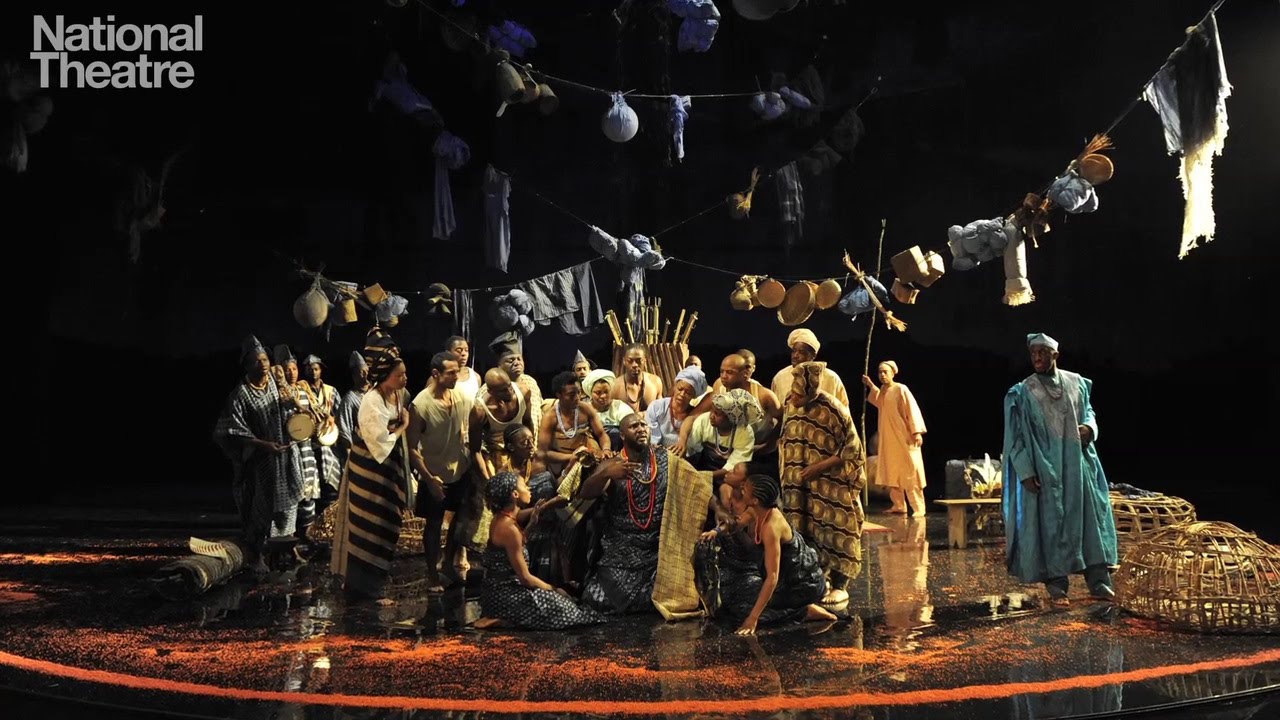
Now, we get productions like Death and the King's Horseman at the National Theatre:


Where a Yoruba tribe reenacts a story of their own telling and play white characters:


When asked about the controversy, the director had this to say:
"The approach has been to frame the play as a ritual performed by the Yoruba story tellers," he said. "They play the black and white parts - and the bushes and at one point all the windows of a house."
However, the idea of white face has come into the zeitgeist more recently with productions like
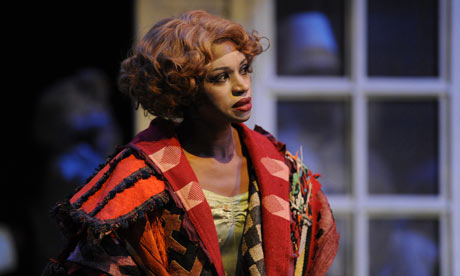
Where Shawn and Marlon Wayans:


Play these gals: 


Yes, this was a movie...

Is it always inappropriate for actors to play a race other than themselves? No.
Is it always inappropriate for white actors to play any other race? No.
I don't wish to speak for anyone, but Mr. Suh (author of Jesus in India, cancelled due to white actors being cast to play South Asian characters) may disagree:
"The practice of using white actors to portray nonwhite characters has deep roots in ugly, racist traditions," Mr. Suh continued. "It sends a message, intended or not, that is exclusionary at best, dehumanizing at worst."
So...Maybe? But, no.
See, the American Theatre article makes a really interesting distinction:
Color-blind vs. Color-conscious
Color blind is what theatre has been doing for centuries and falls into the category of what Mr. Suh calls "ugly, racist traditions."
It opens up roles to white performers that would traditionally go to non white performers, producing a kind of cultural colonialism/appropriation.
It is dangerous because it forces non white performers to the outer edge of "normalcy" and makes whiteness conventional.
What some call an "erasure" of non white bodies from performance, story, and therefore, life.


But, color-conscious is something new.
In SoHo Rep's An Octoroon, there are three male actors:

  • One white
  • One black
  • One Native American
In it they play, respectively:
  • The red-faced Irishman, and the fiery, noble Native American
  • The noble, white romantic hero and the evil, white usurping overseer
  • The ever-loyal Uncle Tom character and the innocent, black, boy slave
They played their roles in
  • red-face
  • white-face
  • black-face
They were so conscious of their race roles/choices that it physically hurt.
Because they were such a diverse cast and had made such delightful casting/design choices, the play was the most incredible piece of theatre I have ever personally witnessed.

This was a new work, devised and written by the ensemble performing it and unflinchingly talked about race and race relations (right down to the final climax, which I shan't spoil here).
But, what happens after?
Now, that the play is published and it will (deservedly) be produced by other companies?
Do they need to adhere perfectly to those casting decisions?
Are they implicitly part of the script? The text? The play? (whatever that is/means)
I do not know.
But, according to the American Theatre article that brings us to the first principle:

  1. The first principle is the creative control of the playwright over critical aspects of their work. We stand in solidarity with the Dramatists Guild's letter in defense of playwright's right to approve changes made to their text, which includes, but is not limited to changes made to the characters' race and ethnicity
The Dramatist Guild Letter (link) mentions


Who respectively produced:

  • Jesus in India (self-explanatory)
  • The Mountaintop (a play about Rev. Dr. Martin Luther King Jr's last night on earth)
  • and The Motherfucker with the Hat
The controversial casting in all these cases favored white actors:
  • Three South Asian characters were cast by white/mixed race actors
  • Dr. King was cast as a white actor
  • The lead Puerto Rican characters were cast with white actors
Two out of three of these productions were cancelled and none received explicit permission on the part of the author to produce these works in this way.
Mr. Suh released a brilliant statement in defense of the action taken: 
"On November 9, after confirming that a fully executed license agreement did not exist, I sent an email to [ ] insisting that she either recast, or cancel the production. I absolutely understand that this has caused anger, confusion, and disappointment among the actors and crew that had been hard at work on the piece. I do not take that lightly. The students are victims, and the timing of this mess has raised many questions. But the timing was never in my control."
"Control" is the word used.
What is and is not within the control of the creators of a piece?
"Play licenses clearly state that 'no changes to the play, including text, title and stage directions are permitted without the approval of the author' or words to that effect. Casting is an implicit part of the stage directions; to pretend otherwise is disingenuous" (link)
So everything within a given script:
This.
Cannot be changed without the express, written permission of the author.
What about concept?
Directorial vision?
"It has been the norm in the theatre (American theatres, at least) that the intentions of the creators trump the vision of the director unless the work is in the public domain." (link)

So no matter what author trumps other artists.
And that may be fair.
Because of this:
"Playwrights own our material. We are protected by copyright; in fact, we have sacrificed a great deal for the privilege of authorial ownership, most notably the right to unionize.  We have foregone equitable compensation, health and pension benefits, and the right to collectively bargain.  But in doing so, we have retained the hard-won right to protect the integrity of our work. This includes approval of all creative elements, including the cast." (link)
So playwrights sacrifice a lot in order to control their material.
But, if you look at the cases at Clarion, Kent State, and Hartford's TheaterWorks...
Clarion and Mr. Suh had a fundamental disagreement, but at least they could discuss.
The director of the piece a Ms. Michel stated: 
"Had I been able to have a conversation with him, I would've quickly understood his views and we could've either come to a consensus or I would not have done this play." and "We are a small state school in western Pennsylvania, and trying to bring cultural diversity here is challenging, i still believe what we did with this play was beautiful. It's very unfortunate people won't be get to see it. [sic]" (link)
They weren't able to communicate in time. 
Even Mr. Suh acknowledged it.
Not enough time. Not enough communication.
This is difficult enough.
But, what of the conversation that never gets had: that of the audience and the play produced.

At Kent State, the director did, in fact, cast a white actor as Dr. King as well as a black actor.
This was done in order to engender conversation about race relations.
I suppose they succeeded.
But, the playwright feels wronged, a distortion of the play, which is unfortunate.

So what is to be done?
According to Dramatists: 
"Directors who wish to dramatically reimagine material can choose from work in the public domain. But, when a play is still under copyright, directors must seek permission if they are going to make changes to the play, including casting a character outside his or her obvious race, gender or implicit characteristics. To do so without meaningful consultation with the writer is both a moral and a legal breach."
Okay. 
So only works in public domain can be utilized?
Fair enough.
Except for one or two snags:
Mainly copyright and its terms.
See every time Disney is about to lose Mickey:


They throw a huge fit and this happens:

For those who are curious, these are the various acts that extend copyright.
Originally copyright worked a lot like patents.
You make a thing, you are allowed free use of it for a limited number of years from its publication.

Then, people are allowed to make knock offs after a little while.

Thirty years after publication.
Then, it was extended to fifty years.
Now, it is seventy years.
After the life of the author.
So if you want to know how screwed you are, take an author's life expectancy and add 70 years.
Some works are 120 years from the date of their creation.

Copyright has moved out of the hands of the authors and is now meant to ensure the livelihood of the corporations that make a profit off of their work.
Not to name names (Disney).

So all of these wonderful conversations that are happening around the country with playwrights everywhere...
They cannot be held with all playwrights who fall under the realm of copyright.
And if copyright terms keep getting extended, more and more work will be withheld from public domain.
Thus far, I do not plan on ever seeing the work of...
Samuel Beckett:
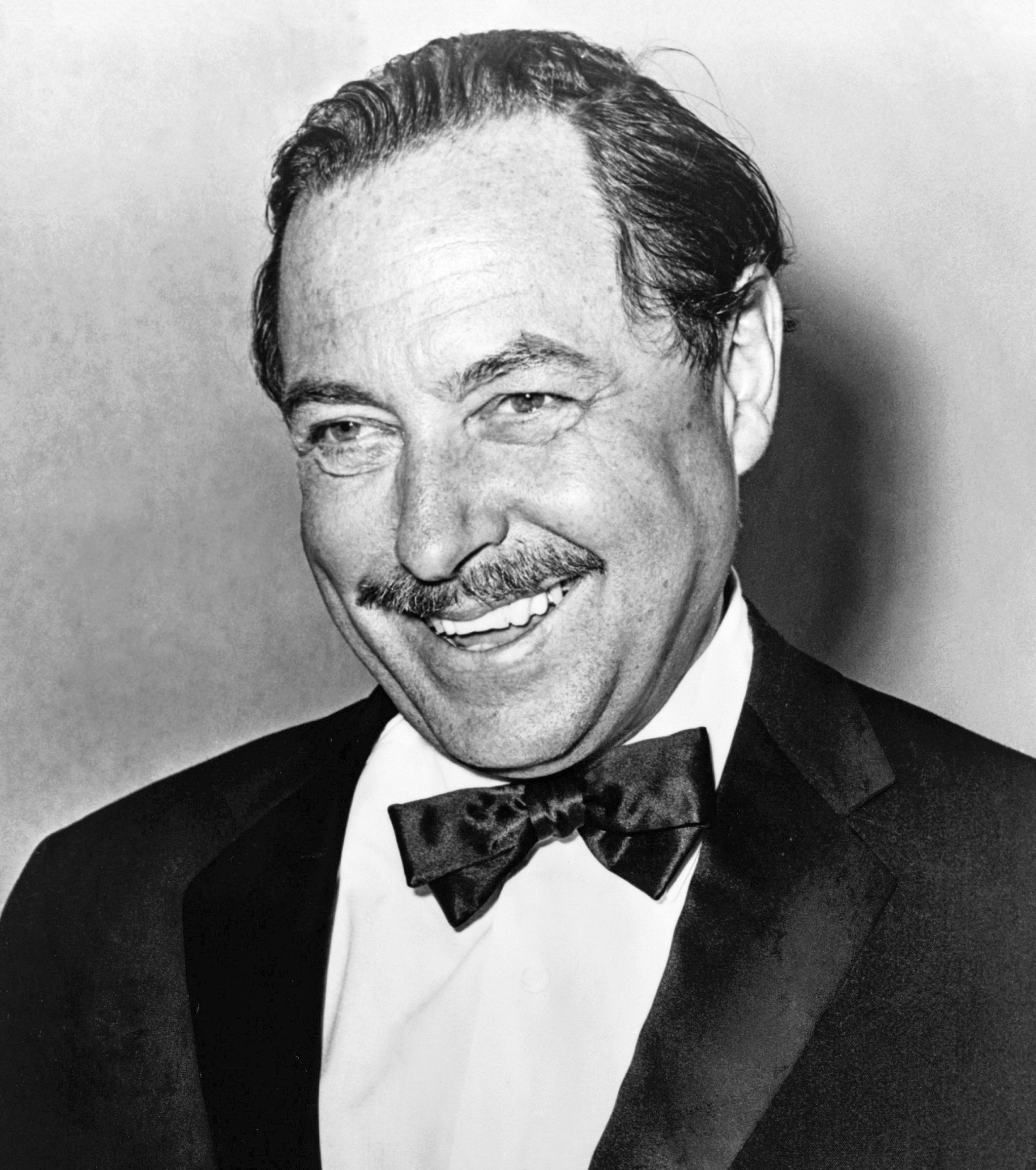
Or Tennessee Williams: 
OR Arthur Miller:
Ever enter the public domain.
And that is a damn tragedy. 
Because one, these brilliant playwrights are dead, and two, their work can never be questioned.
It will forever be preserved by their various estates and agencies under the idea of authorial authority granted by copyright and the extension of said terms till the next century (definitely in Arthur Miller's case).

Dramatists again: 
"One may agree or disagree with the views of a particular writer, but not with his or her autonomy over the play."
Well, sure. 
But, what about the dead ones?
What autonomy is left to them?
I don't want to rail anymore on copyright or its ludicrousness, but this is the sole point on which I disagree with the American Theatre article:
If playwrights have absolute autonomy about all decisions to change their crafted text, then, copyright can and should end at the cessation of their life because who are we to ask about authorial intent besides them?

How can we pretend that copyright solely protects the author when all work published after 1923 and unpublished work after 1896 remains irrevocably under lock and key?
I do not wish to do away with copyright, but its logistics confound me.
This conversation is important because it is about racial bias, the erasure of non white bodies
But it is also about the amount of power and control playwrights wield in this country.
Control over the various productions of their show whilst they live and to our detriment after their demise.

Here is a photo of Shakespeare's a Midsummer Night's Dream:
Awful lot of asses up here.

(it is a joke, but the point stands: not a single lady up there. Let us not forget that theatre has also been a male's game and not just a white one. More ladies!)