Showing posts with label Romeo. Show all posts

Tuesday, October 4, 2016

It's Not the Role, mate, It's How You Use It (OR Small Actors and Where to Find Them)

Today we discuss small roles.
What do I mean by that?

Small Roles

What makes a small role? 

Leading Role

A leading role is clear. 
They are the protagonist/antagonist/main motivator of plot and action.
They get top billing: 

King Lear:

 Macbeth:

 Romeo & Juliet


Then, there are supporting roles.

Supporting Role

(These are the Oscar nominations.)
People who support the leading characters in what they do (usually sacrificing health and happiness in the process)

Edgar/Kent: King Lear

Bottom and Top Left

 The Witches: Macbeth

 Eponine: Les Mis

Oops...
Surely these aren't small roles.
These are the roles everybody wants to play.
Like Hotspur and Lady Percy (who literally have two monologues each).
These are the roles people salivate over, sometimes more than the leading roles.
So these cannot be small.

Extras

Now, we come to extras:

Star Trek (the other red shirts)

Batman (The other authority figures getting hit in the face)

 Harry Potter (The other people wishing their children farewell)


These are arguably the smallest thing you can be on a project.
These are the Lords Attendant in Shakespeare.
They are there to fill up a bare stage/frame.
Therefore, some do not consider them roles.
For the sake of this article, we won't either because they technically don't make the cast of characters.

So where are the small roles?
Well, there is another class called bit roles.
These are roles that are (usually) under five to six lines in length.

The Apothecary: Romeo & Juliet

Remember him?
He is the one who gives Romeo the poison?
Remember?
Yeah.
"That Old Guy"
Yes. 
"With the Beard."
Yep.
Him.
He is one of the most significant people in the play because without him, Romeo doesn't kill himself in Juliet's tomb. 
Juliet doesn't awake to find him poisoned.
We don't get a farewell kiss: 
"I will kiss thy lips/Haply some poison yet doth hang on them."
None of it.
But, that is his function: to move the plot along. 

There are others in the Shakespeare canon.
None of which you remember:

Seyton: Macbeth


You know...the one who dresses Macbeth and says, "The Queen, my lord, is dead."

 Fortinbras: Hamlet


You know...the one who takes over Denmarke after Hamlet has already killed everyone?

No? 
No one else does either. 
So these are small, small roles: 
BIT ROLES
  • Often involving a total of one scene 
  • a bare fistful of lines
  • and small actors

Small Actors

HOWEVER!

From our Lord and Savior Stanislavski:
"There are no small parts, only small actors. "
-Konstantin Stanislavski
Mr. Stanislavski began his theatrical career in Russia, where the predominant form of art (in much of the world at that period) was melodrama.
Some hallmarks of melodrama:

  • larger than life characters
  • titanic/mythic struggles set in a familiar/domestic atmosphere 
  • far and away places/exotic specimens (Native Americans)
  • enormous spectacle
In the midst of shows like: 

The Octoroon

 Uncle Tom's Cabin


(Yes. These are real advertisements. And yes. These plays actually happened...for decades in The United States)
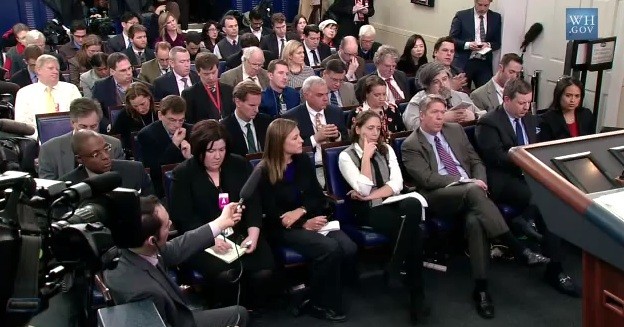
Melodramas are comparable to films or television today: 

Hundreds of extras:
 A diverse, well-written ensemble: 

 All surrounding a powerful leading player:


It was easy in melodrama (and film/TV today) to feel lost in the crowd and the shuffle. 

However, that simply isn't the case and worse it is untrue.
Look at Michael Shurtleff describing Dustin Hoffman:
"After weeks of persuasion, the unknown Dustin Hoffman did come in to audition. He was right: he couldn't sing. However, he gave a marvelous reading of such imagination, intelligence, and humor that Mike Nichols never forgot it. The producer of THE GRADUATE later told me he nearly went into a state of catatonic shock because he couldn't believe Dustin Hoffman was Mr. Nichol's choice for the Ivy Leaguer. It made a star out of Dustin Hoffman," (Shurtleff 10).
Now, Shurtleff is referring to Hoffman's innate talent and skill.
The lesson he concludes is: audition for everything.
I cannot speak for Mr. Shurtleff or Mr. Hoffman (I wouldn't dream to do it), but the lesson I conclude is:
Treat everything like a lead role (even auditions) 
You never know how/when something will be your most important performance.
Mr. Hoffman may not even remember the instance in question, but Mr. Shurtleff draws a direct line of causation to Mr. Hoffman's success with that particular audition.

What does this have to do with bit roles?
Well, treating them like any other is the key to success.
You have an actor with innate talents and skills; they use them accordingly and they can shine in any role.
Louis Zorich recounts his time in London, seeing The Cherry Orchard at Haymarket in the Actor's Chekhov: 
I think it was Joan Plowright doing Ravenskaya and Frank Finnley doing Lopahkin and I forget who else. And believe it or not, the guy who stole the show, according to the critics was Pishchik! Pishchik? (59)
Let me tell you what this Pishchik did. It's the scene where Charlotta enters with the the dog. They're all crossing the stage to go to the next room. And when she comes with the dog he sort of looked at the audience and winked - he was commenting to the audience about the play. This is the guy who walked away with all the reviews for the show! I said to myself, "What is wrong with these people, they don't have a clue!" (Ibid.)
Mr. Zorich concludes that the British have no idea what to do with Chekhov.
Everyone from top down (including very talented leading players) had no idea what they were doing and shouldn't be performing Chekhov at all!
That is a pretty remarkable claim, particularly with some of the characters they had named.
Later on, regarding another production Zorich says:
"Years ago, Olympia saw the Moscow Art Theater do The Cherry Orchard, and she said Pishchik did something she'll never forget. He comes in with the rug and all that and finally he says, 'Give me water, water, water!' And Pishchik goes - [He drink s a glass of water with both hands, gulping it, spilling it all over his face.] He played the longing, he WANTED water. How badly did he want water? It was like life and death! He wasn't just - [sipping.] But he, he - WANTED water, he wanted fucking water! And some of these things, when yous see actors really connected, you never, ever forget. A glass of water? A glass of water? His whole life was in that glass of water! It's incredible" (65). 
The same role was given radiant reception, both by Ms. Dukakis and Mr. Zorich because of its treatment.
Therefore, the character or the role does not determine its size, but its treatment on the part of the actor.
However, I would amend the phrase and say:
There are no small parts, only small directors. 
However, that will be the subject of a different post on how to rectify this state of small-acting.
Tune in next week.

Work Cited:

Hackett, Jean, and Nikos Psacharopoulos. The Actor's Chekhov: Nikos Psacharopoulos and the Company of Williamstown Theatre Festival, on the Plays of Anton Chekhov. Newbury, VT: Smith an Kraus, 1993. Print.

Shurtleff, Michael. Audition: Everything an Actor Needs to Know to Get the Part. New York: Walker, 1978. Print.

Tuesday, June 28, 2016

On Storms (And Other Art Necessities)

Today let us talk about storms.
Life is full of them.
So too must art be.

What is a storm?


Nope.

Yesssssss.

So what are they?
According to their rote definition:
a violent disturbance of the atmosphere with strong winds, rain, thunder, lightning, or snow
Source 
(Look Ma! I cited!)
Another
(It's British! So it has more clout!)

Define Clout

Anywho, now that we have had fun, let us get back to the aweful (original).

Storms.
This rather clinical definition does not encompass the majesty of the word nearly so well as its synonyms:

  • Tempest
  • Whirlwind
  • Gale
  • Squall
Shakespeare calls one of his latest works The Tempest and for fine reason.
There is something magical and romantic about a tempest.

Sarah Ruhl addresses storms in her 100 Essays I don't have Time to Write.
In it, she describes them beautifully.

A storm comes sweeping through the natural world.
It upsets the balance of everything.
It disrupts stasis.
People go running, things get tied down, animals aren't let out.
They are terrifying things and those are the storms we are aware of.

There are flashfloods and freak weather as well.
There are even documentaries about it:

You know it.
It was really popular not too long ago.
I think because of its attractive host:


Point being, there was a time when we understood storms.
I think it was when people lived primarily out of doors. 
Think about the drama and the art of every great movement in the theatre.

The Greeks

Their Theatre

Looks like this.

The Play

Medea


In Medea, we have a scorned woman, mother of two of Jason's children, a warrior in her own right, who is left for a political marriage. 
In response is the argument of the play. 
The conclusion is that she murders her children and Jason is left to despair. 
  • She gets a fair trial
  • Judged guilty by a jury of her peers.
  • Sentenced to death
  • Has a stirring plea on the gallows
  • Tragic death
Don't remember that in Medea?
Because it doesn't happen.
Medea is saved by one of the gods and rides away ON A CHARIOT MADE OF DRAGONS.


That seems weird and not in keeping the legal justice system.

Who cares?
It's rad!
But, people make fun of deus ex machina like this.

It may be for as simple a reason as:
We are so used to a logical progression in our art.
A to B, then C logically follows.
The Greeks had no such qualms.

The Deus ex Machina or "god in the machine" stems from the Greek.
The Greeks used to lower deity characters down using a pulley system, hence the expression.
Now, it is synonymous with a plot device to fix an otherwise impossible situation.
It is a disruption of logic.
A storm, if you will.

The Elizabethans

Their Theatre

The Play

The Tempest.

No.
That would be too easy.
Let's see...
Romeo & Juliet.


In this little debacle,

  • star-crossed lovers from warring factions marry and bed one another. 
  • Romeo murders Juliet's cousin Tybalt after an enforced peace and is banished. 
  • Juliet takes a draught of (never named in the play) and falls into a death-like coma. 
  • The Friar (purveyor of nameless medicine) sends a letter off to Romeo to assure him of things.
  • Romeo doesn't receive the letter and instead rushes off to bury himself with Juliet.


It all turns on a letter.
The letter is the storm.
In almost every production of R&J, the letter will be given to Balthasar, a relatively small role, but a Montague, who will then be played by a woman who is hopelessly in love with Romeo. And that is why the letter is waylaid.
Why?
Because it means saving on casting another actor in the role of Friar John?
No.
Because it makes sense.
And we love for things to make sense.
A to B, then C.
Balthasar loves Romeo, therefore, she doesn't give him the letter and he kills himself.
Like dominoes.

Naturalistic Theatre

Their Theatre


The Play

A Doll's House. 


In it, the protagonist Nora is infantilized by her husband, Torvald, to the point of ludicrousness. 
  • Turns out, prior to the events of the play, she took out a loan in her husband's name with her father's surety, but forged their names, committing a crime to save her husband's life. 
  • Krogstad, the man who loaned her the money, presses this advantage to ensure that he keeps his position at the bank. Nora, puts off telling her husband. Kristine, her oldest friend and long lost love of Krogstad, offers herself as a peace offering to him, asking for his hand in marriage. 
  • In the end, Torvald receives the blackmail letter and the other letter that says Krogstad has reconsidered. 
It is like deus ex machina, except the tragedy ensues. 
  • Nora leaves Torvald because she now recognizes that she must. In fact, she spends a two page monologue explaining why this is the best choice for her.

A to B, then C.
She could have just left. 
That would have been a storm.

Often, the Naturalists (Ibsen, Strindberg) are credited with creating what is known as the well-made play. 
A well-made play is exactly that, logical.
It follows the 
A to B, then C structure.
It is a relatively new invention (only a hundred years or so), but we, in American theatre have rigorously adhered to it since.
So much so, that I believe it to be crippling our growth as an art form.

Just look at some of these 


I get it.
There are parallels.
Symmetry.

Almost any contemporary play will be done isolated within a rigid structure.
I mean this literally e.g. a house. 
I mean this structurally e.g. the climactic structure 
Almost any play will take place in of doors or in a single location near in of doors (a backyard)

Gone are the gods.
Gone are the storms.
Gone are the myths.

Now, this is not to imply that there are no plays without these things.
No contemporary examples.
One of my favorite modern shows is Deadwood.

In "Amalgamation and Capital" the characters are negotiating a thorny bit of dealing.
This contract will literally set the town up for peace and prosperity.
Everything is going aright.


When suddenly a wild horse appears and kills the sheriff's only son.


Because of it the deal doesn't get negotiated.
Heated words are exchanged. 
The town grieves.
Things happen.

It is a truly horrific moment and one of the best in cinema.
But, why is it?
I maintain because it is a brilliant storm.

Nobody could have predicted that that would happen.
None of the characters.
Not the audience.
It was a freak, natural accident.
A horse, one of the wildest, most beautiful creatures maimed a child through fear and the act of running.

What a great storm.

So how do we make art like that?
I'm unsure.
My instinct is to say let it happen spontaneously.
But, if it happened spontaneously, then we would have more storms in art.

Trust your gut. 
Go with it.
And in lieu of a gut instinct, try going out of doors more.
Meet a summer storm more.
Get lost more.
Find yourself in a blizzard more.

Monday, February 1, 2016

Genre (It Feels Pretty Useless, unless we are talking about Style)

Today let us discuss genre.
Genre is a way of organizing art into categories.
That is literally it.

Now, we can talk about the different classes of theatre, but the essential idea of genre comes down to just that:
Classification.
Therefore genre is the classification of theatre (or other art forms) into more manageable parts.

SO let us start with the biggies:
Tragedy and Comedy!
You know these masks.
Everybody knows these masks.
I hate these masks.
But, they are perhaps the two biggest and broadest categories of theatre:

  • Comedy where everything ends for the best for the protagonist: They get the girl, they get the job, they get money, their parents weren't really dead the whole time, and "Everybody lived happily ever after"
  • Tragedy where everything ends for the worst for the protagonist: They do not get the girl, they end up a pauper and alone, their parents were poisoned, and everybody DIES. THE END.
Now, you may have noticed something about what constrains these two genres:
Everything comes down to how they end!
Does it end happily or unhappily?

Why so much emphasis on the end?
Because until the end, comedy and tragedy are identical.
Why do I say that?
Because of Murphy's Law.

Murphy's Law states: 
"Anything that can go wrong will go wrong."
-Murphy
What does this have to do with comedy/tragedy?
Everything.
Because it is an innate principle of story:
Anything that can go wrong will.

Look at Romeo & Juliet

  • A Montague bites his thumb at a Capulet
  • They fight and people are killed
  • The families are banned from ever quarreling again
  • The Capulets throw a big celebration
  • The Montagues sneak in
  • Romeo falls in love with Juliet (masked)
  • They get married
  • Romeo's best friend is killed by Juliet's cousin
  • Romeo kills Juliet's cousin
  • Romeo is banished
  • Juliet is courted by a new suitor 
  • She fakes her death to avoid another marriage
  • Romeo hears of her death and goes to her tomb to die with her
  • Just before he takes the poison, Juliet wakes up and they elope
  • The families agree to never fight again for the sake of their children
And they all lived happily ever after!

Now, for those who don't know the play, I may have lied.
The second to last point is incorrect.
Textually Romeo takes the poison before Juliet wakes up.
She discovers him and we get a double suicide.
But, that is how easily it all could have gone right!
If Juliet were awake when Romeo got to the tomb, the whole play could have gone differently.

So Tragedy and Comedy come down to the second to last point (otherwise known as the final climax, just before the denouement)
Well...sort of.
See genre also tends toward something called style.
Style is the way in which something is presented.

I just described a comedic Romeo & Juliet.
However, Romeo & Juliet is a tragedy.
And it is: nobody ends the play happily, certainly not the main characters.
Therefore, the play is by my definition a tragedy.
So the play is often designed and acted like this:

Tragedy (classically, I won't say all of the time or even most of the time) is construed as being heavy in tone, therefore,

  • darker/muted colors with dramatic flashes are used (note the red of Juliet's dress and Romeo's neutrals), 
  • extreme locales or surrealistic sets with intense symbolism (note the fallen leaves and falling down the stairs as opposed to up)

However, if a play could be either comedy or tragedy until the end, it stands to reason that a valid interpretation of Romeo & Juliet might be something like:
Comedy (again tends, not as a rule) is construed as being lighter in tone, therefore:

  • lighter/brighter colors (notice the pinks and yellows of Juliet and the greens/gold in Romeo)
  • settings punctuated for comedic/picturesque effect (Juliet is literally sparkling right now)

It is entirely dealer's choice.
It depends on what the artists wish to accomplish with their performance.

  • Are the themes of destiny/fate of the star crossed lovers to be highlighted and hinted early on, suggesting it was never going to end happily?
  • Are the themes of love triumphs to be highlighted and that ultimately at any point this could have been prevented if the families had paid more attention to their children?
Thus, when talking about genre it is important to keep style in mind, but they need not be dependent on one another.

Remember genres can be as many and varied and nuanced as:

  • Tragicomedy
  • Burlesque
  • Farce
  • Light Farce
  • Black Comedy
  • Minstrelsy 
Or schools of thought like:
  • Epic Theatre
  • Theatre of Cruelty
  • Theatre of the Absurd
  • Holy Theatre
So what is the point of genre for artists?
I believe it is meant to be a kind of shorthand.
I have had conversations that literally went inside of rehearsal:
"Well, this is a comedy. We all know what that means. Yuck, yuck."
-Unnamed Director
One of my favorite sayings about style came from our discussions on Romeo & Juliet
"We will discover the 'style' through rehearsal."
-Blair Anderson
Because ain't that the frigging truth?
We work on style collaboratively and make it out of whatever stuff the actors/directors/designers bring to the performance.
I firmly believe Romeo & Juliet is a comedy until it isn't.
Therefore, in productions I direct or act in, I attempt to bring that energy to the performance.
I say attempt because there are absolutely those who think antithetically to me.
And that includes the audience.
Some believe R&J is a tragedy and they should be crying for five acts and are afraid when they chuckle.
I have spoken with these people.

So style is something dynamic that the performers/audience collaboratively create.
What about genres?
I don't find them a useful shorthand in my work.
In fact in trying to discuss genre, I am at a loss for what to say mostly because it is an abstract idea.
I can talk for hours about tragedy or comedy, but genre? *shrugs*


Monday, August 10, 2015

Juliet is a Psychopath (Or: How I got the Part)

This is my audition for Romeo & Juliet.
For one of the titular roles. Juliet.
No, really.
This is my headshot:
(I am willing to do nude)
Well here it is:
My audition for Romeo & Juliet (Juliet though).
Juliet is a beast. I mean it is her play, no doubt about it.
So where does the play start?
With a meek little ingenue sighing about love and shit.
Juliet? No. It's Romeo. (we'll get to him)

Scene One. Enter ME

Juliet is in another part of Verona. Away from the crying and the bitching.
Nurse calls me down and I'm like: "Who calls?" I know it is the Nurse, but she does not speak to me like that.
It's my mother.
She excuses the Nurse and then remembers she has no idea who I am.
Where am I coming from? Elsewhere, I had shit to do, probably curing the black plague or something. It's a slow Tuesday...no one died today.
So they tell me they want me to marry some pansy named Paris.
I say, "I'll look to like if looking liking move." I'm not gonna fall in love with someone I just met! (foreshadowing!)
(DESIGN: This whole scene I picture Juliet getting stripped down to nothing, basically naked in front of the audience, then we see her as either just a girl or a woman grown.
Then, they infantilize her by wrapping her in a party dress, swaddling her in fabric.)

Scene Next. Hashtag Party

So I have just been stuffed into this party dress, I head immediately downstairs and lo!
PRO-TIP:
(The first interaction between R&J happens in silence. Screw the whole sonnet, which is beautiful poetry, blah-blah, whatever. The first time they meet is in silence. How do I know this? Juliet and the rest are in MASKS. There is nothing so magical about a person in a mask that enchants a person at distance to start asking about them. Okay back to the action.)
A boy holding a torch!
(DESIGN: read up on torch carriers. It is the dumbest position...EVER. In most stories everyone gleans over this fact. Everyone has a torch guy. Prior to modern light there was someone who carried it wherever you went after dark. THAT is what Romeo volunteers for. If you do not highlight that he is being a little bitch, then the whole next scene is silly.)
Nope. A prince. Paris. A man's man. Paul Rudd in a space suit.
This really happened.
So we dance. And Romeo is mouth breathing on the side of the party staring at me.
It is my party! Everyone is here for me and I am killing it.
Then, the mouth breathing Romeo appears and steals a kiss.
First kiss, first impressions, first love.
Oh and this:
My only love sprung from my only hate! Too early seen unknown, and known too late! 
He is the son of my mortal enemy. So that sucks.

Scene After! The Balcony

PRO-TIP:
(There is not a single mention of a balcony in the entire play. Balconies weren't invented yet as mentioned in this fabulous article: The Balcony Scene in Romeo & Juliet is a Lie.)
Just going to leave this here:
Any other part belonging to a man.
(Hint: It's a penis)
So I am talking up how much I love Romeo and then someone whispers in the bushes.
Creepy. There are not words...nope. There is! RAPE!
I threaten to call the guards and lo, it is the boy I was just gushing about.
Awkward sauce.
So I get a proposal out of the deal and set up a time to do the deed.

Scene The Everything:

So we get the engagement.
I rush to Romeo whilst at prayer.
We get married and he kills my cousin Tybalt after the reception.
I curse him, curse Tybalt, curse myself.
Refuse Paris.
Go to the Friar, get the potion, drink the potion, fake death.
Piss off parents.
So far so good.

Scene Last: The Awful:

And then we wake up to the worst scene of ever.
I wake up in my wedding clothes.
To the Friar begging me to leave.
Surrounded by the bodies of my loved ones: Tybalt, Paris, and Romeo.
Romeo is dead in my arms.
(DESIGN: I see Romeo clutching Juliet to his chest. So she wakes in his arms. She is enclosed in the arms of her husband as the Friar tries to pry her out. Nest of death and contagion and all that)
I not only attempt to drink the poison from the cup, but his lips, and then fall on his dagger.
And I don't do it half-assed.
Oh no.
I die instantly so (DESIGN) stab between the ribs, through a lung, into the heart, and wrench it back out.
Insta-death.

And everyone else cries over me for a while and erects a golden statue in my honor.
Awesome

Character Building

Juliet is not whiny.
Too often have I seen Juliet played as a petulant child.
She does not cry without cause. She is willful and stubborn and just a little bit crazy.
You heard me. CRAZY.
The seed of R&J is not love, it is not conflict, it is not war. It is passion. Obsession.
For those who don't know the difference:
Love is what the Dalai Lama practices every day:
(You beautiful bastard)
Obsession is what you practice when you skulk underneath your ex-girlfriend's window:
(It is meant to be)
The subtleties may be lost on some, but they are there.
Romeo gets a bad rap for being fickle and changeable.

  • He loves Rosaline completely
  • He will never leave her
  • He leaves her for Juliet
  • The play happens
Juliet is just as changeable, just as bat shit as Romeo.
When she hears Romeo killed Tybalt she reacts like a person: 
Did ever a dragon keep so fair a cave?
Paraphrase: How could he? Why? He is so beautiful on and on and on.
Then the Nurse damns him. Effectively agreeing with Juliet.
How does Juliet respond?
Blistered be thy tongue for such a wish, he was not born to shame.
A big middle finger to the Nurse who is crying over her "best friend" (Tybalt) in the whole play!
When asked, Juliet says she has to side with her husband.
That is pretty strong loyalty for one who has known him for twelve hours.
How long?
You heard me.
Ah, poor my lord, what tongue shall smooth thy name, when I, thy three hours wife have mangled it? (emphasis not-Shakespeare's) 
They've known one another for a night and a day. Half a day.
(MATH: It was dark when the party starts. Assuming they meet right after the party and talk all night, it is nine when Romeo meets the Nurse , ten when she gets the tackled stair, eleven she talks with Juliet, noon when they are married, and three now...they've known one another all of twelve hours. Fifteen if I feel generous)

So Juliet sneaks Romeo into her private chambers and they manage to consummate this marriage.
Yeah, the same day that her new-found husband murders her cousin, Juliet has sex with him in the house they grew up in....classy.
So Romeo tries to leave and we get the lark scene.
Which, classically goes like this:
Actually that looks pretty good.
Except for the fact that Romeo is banished and will die in Verona starting TODAY.
So does Juliet help him with his clothes? Does she bid him adieu till they can meet up outside the city proper?
No. No, she quibbles about which bird is singing.
It is fucking DAY!
(DESIGN: make it day. Make it so clearly day that it physically hurts to do the lark scene. Because it physically hurts to do the lark scene. Trust me. Juliet is crazy. She is denying it is day and the harder she has to work the crazier she looks. Romeo will die if he stays. Let him die. He is committing suicide by staying).
And he does. He says he will die because he cannot bear to go (Pro-tip: watch the 1968 film, you will know why he stays).
What does Juliet do next? Asks him to promptly leave.
At this point Romeo wants to kill Juliet.

So her parents show up and tell her to marry someone else.
What does she do when prompted to remarry?
Go to the Friar and threaten to kill herself.
Now, I know all the cool kids are doing it (glances at Romeo), but for real though:
She pulls a knife on the Friar:
 Behold, twixt my extremes and me, this bloody knife shall play the umpire
 That is a real thing, she threatens him that if he cannot come up with a plan she will kill herself in front of him.
Boom.
Crazy pants.
In the tomb she finds out that her husband is dead and she attempts to kill herself no less than three times.
Three.
Think about the mental resolve to off yourself.

  1. Try the cup...it's empty
  2. Try the lips...no poison
  3. Try the knife...that works!......ow

She is a monster. Searching for love in a world on the brink.
She grabs onto it like Woody Harrelson's character in Zombieland looking for Twinkies
Actually that would be a good summation of how I would play Juliet.

  • Hungry
  • Apocalyptic
  • Craving
  • Weirdly moving during that flashback with the dog

Cast me if you dare.