A place to put my musings on art, community, and life because if I keep it in my head, well it hasn't worked out for me so far...why don't you hold it for a spell?
Today we discuss small roles.
What do I mean by that?
Small Roles
What makes a small role?
Leading Role
A leading role is clear.
They are the protagonist/antagonist/main motivator of plot and action.
They get top billing:
King Lear:
Macbeth:
Romeo & Juliet
Then, there are supporting roles.
Supporting Role
(These are the Oscar nominations.)
People who support the leading characters in what they do (usually sacrificing health and happiness in the process)
Edgar/Kent: King Lear
Bottom and Top Left
The Witches: Macbeth
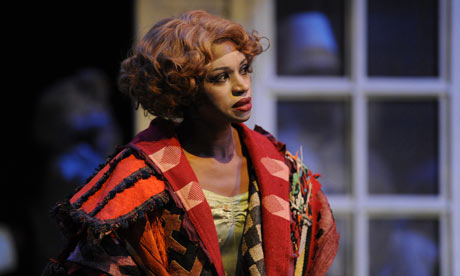
Eponine: Les Mis
Oops...
Surely these aren't small roles.
These are the roles everybody wants to play.
Like Hotspur and Lady Percy (who literally have two monologues each).
These are the roles people salivate over, sometimes more than the leading roles.
So these cannot be small.
Extras
Now, we come to extras:
Star Trek (the other red shirts)
Batman (The other authority figures getting hit in the face)
Harry Potter (The other people wishing their children farewell)
These are arguably the smallest thing you can be on a project.
These are the Lords Attendant in Shakespeare.
They are there to fill up a bare stage/frame.
Therefore, some do not consider them roles.
For the sake of this article, we won't either because they technically don't make the cast of characters.
So where are the small roles?
Well, there is another class called bit roles.
These are roles that are (usually) under five to six lines in length.
The Apothecary: Romeo & Juliet
Remember him?
He is the one who gives Romeo the poison?
Remember?
Yeah.
"That Old Guy"
Yes.
"With the Beard."
Yep.
Him.
He is one of the most significant people in the play because without him, Romeo doesn't kill himself in Juliet's tomb.
Juliet doesn't awake to find him poisoned.
We don't get a farewell kiss:
"I will kiss thy lips/Haply some poison yet doth hang on them."
None of it.
But, that is his function: to move the plot along.
There are others in the Shakespeare canon.
None of which you remember:
Seyton: Macbeth
You know...the one who dresses Macbeth and says, "The Queen, my lord, is dead."
Fortinbras: Hamlet
You know...the one who takes over Denmarke after Hamlet has already killed everyone?
No?
No one else does either.
So these are small, small roles:
BIT ROLES
Often involving a total of one scene
a bare fistful of lines
and small actors
Small Actors
HOWEVER!
From our Lord and Savior Stanislavski:
"There are no small parts, only small actors. "
-Konstantin Stanislavski
Mr. Stanislavski began his theatrical career in Russia, where the predominant form of art (in much of the world at that period) was melodrama.
Some hallmarks of melodrama:
larger than life characters
titanic/mythic struggles set in a familiar/domestic atmosphere
far and away places/exotic specimens (Native Americans)
enormous spectacle
In the midst of shows like:
The Octoroon
Uncle Tom's Cabin
(Yes. These are real advertisements. And yes. These plays actually happened...for decades in The United States)
Melodramas are comparable to films or television today:
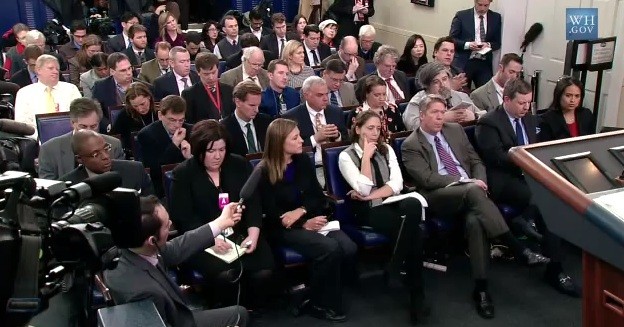
Hundreds of extras:
A diverse, well-written ensemble:
All surrounding a powerful leading player:
It was easy in melodrama (and film/TV today) to feel lost in the crowd and the shuffle.
However, that simply isn't the case and worse it is untrue.
Look at Michael Shurtleff describing Dustin Hoffman:
"After weeks of persuasion, the unknown Dustin Hoffman did come in to audition. He was right: he couldn't sing. However, he gave a marvelous reading of such imagination, intelligence, and humor that Mike Nichols never forgot it. The producer of THE GRADUATE later told me he nearly went into a state of catatonic shock because he couldn't believe Dustin Hoffman was Mr. Nichol's choice for the Ivy Leaguer. It made a star out of Dustin Hoffman," (Shurtleff 10).
Now, Shurtleff is referring to Hoffman's innate talent and skill.
The lesson he concludes is: audition for everything.
I cannot speak for Mr. Shurtleff or Mr. Hoffman (I wouldn't dream to do it), but the lesson I conclude is:
Treat everything like a lead role (even auditions)
You never know how/when something will be your most important performance.
Mr. Hoffman may not even remember the instance in question, but Mr. Shurtleff draws a direct line of causation to Mr. Hoffman's success with that particular audition.
What does this have to do with bit roles?
Well, treating them like any other is the key to success.
You have an actor with innate talents and skills; they use them accordingly and they can shine in any role.
Louis Zorich recounts his time in London, seeing The Cherry Orchard at Haymarket in the Actor's Chekhov:
I think it was Joan Plowright doing Ravenskaya and Frank Finnley doing Lopahkin and I forget who else. And believe it or not, the guy who stole the show, according to the critics was Pishchik! Pishchik? (59)
Let me tell you what this Pishchik did. It's the scene where Charlotta enters with the the dog. They're all crossing the stage to go to the next room. And when she comes with the dog he sort of looked at the audience and winked - he was commenting to the audience about the play. This is the guy who walked away with all the reviews for the show! I said to myself, "What is wrong with these people, they don't have a clue!" (Ibid.)
Mr. Zorich concludes that the British have no idea what to do with Chekhov.
Everyone from top down (including very talented leading players) had no idea what they were doing and shouldn't be performing Chekhov at all!
That is a pretty remarkable claim, particularly with some of the characters they had named.
Later on, regarding another production Zorich says:
"Years ago, Olympia saw the Moscow Art Theater do The Cherry Orchard, and she said Pishchik did something she'll never forget. He comes in with the rug and all that and finally he says, 'Give me water, water, water!' And Pishchik goes - [He drink s a glass of water with both hands, gulping it, spilling it all over his face.] He played the longing, he WANTED water. How badly did he want water? It was like life and death! He wasn't just - [sipping.] But he, he - WANTED water, he wanted fucking water! And some of these things, when yous see actors really connected, you never, ever forget. A glass of water? A glass of water? His whole life was in that glass of water! It's incredible" (65).
The same role was given radiant reception, both by Ms. Dukakis and Mr. Zorich because of its treatment.
Therefore, the character or the role does not determine its size, but its treatment on the part of the actor.
However, I would amend the phrase and say:
There are no small parts, only small directors.
However, that will be the subject of a different post on how to rectify this state of small-acting.
Tune in next week.
Work Cited:
Hackett, Jean, and Nikos Psacharopoulos. The Actor's Chekhov: Nikos Psacharopoulos and the Company of Williamstown Theatre Festival, on the Plays of Anton Chekhov. Newbury, VT: Smith an Kraus, 1993. Print.
Shurtleff, Michael. Audition: Everything an Actor Needs to Know to Get the Part. New York: Walker, 1978. Print.
The first principle is the creative control of the playwright over critical aspects of their work. We stand in solidarity with the Dramatists Guild's letter in defense of playwright's right to approve changes made to their text, which includes, but is not limited to changes made to the characters' race and ethnicity
The second principle is the importance of ending the harmful practice of white actors playing characters of color (citing the historic examples of whites appropriating other cultures and subsequently subjugating them through theatrical propaganda)
The third principle is that no individual, regardless of their stance on these issues, deserves to be singled out for harassment and threats
Let me deal with these principles in reverse order and degree to which I disagree with the article:
The third principle: I just flat out agree with it. Nobody deserves to be harassed or threatened based on their views and opinions about art or this crazy little thing we call theatre. Done.
The second principle: is a bit stickier. Trickier.
In the American Theatre article, they mention Jim Crow Laws, which were a post- 13th, 14th, and 15th amendment set of rules/codes of conduct.
See we had this thing called slavery (still do, it is called prison/economics, but enough of that) and it was a bad thing.
To make up for it, the 13th and 15th amendments were written to naturalize citizens born here and to not infringe on the rights of any citizens despite race or prior servitude.
This included blacks and whites by the way.
In one fell swoop, all the slaves were set free and the race problem was over!
Except it wasn't.
See the Jim Crow Etiquette came into effect, which were a code of conduct to which blacks were expected to adhere.
After the Amendments to the Constitution, the states that were against the integration of slaves into the United States couldn't just write laws against them, so they invented rules.
Kind of like a big sibling inventing shit you have to listen to even though you know your parents said otherwise.
You can read them at length in the link above, but they include:
Don't offer a hand to a white man as it implies social equality
Don't offer anything to a white woman as it implies force/rape
In Plessy v. Ferguson, the Supreme Court upheld Louisiana's decision to have institutions in place that were for different races.
This is where we get the term Separate, but Equal by the way.
Why is all this important for theatre today?
Well, for one, it is important to understand our history and how painful a one it was and how long it lasted: Jim Crow Law passed into effect after the Civil war in the 1870s and only came down in the 1960s.
There are very much people still alive who remember those laws all too well.
But, the name: "Jim Crow" comes from "Jump Jim Crow" a white comedian in blackface from the 19th century performing an imitation of a disabled black slave, going so far as stealing his name.
Yeah.
Theatre that literally influenced a culture to dominate another.
So theatre is important and we can agree on that.
SO why are we talking about it today?
well...Crack open any theatre textbook and see:
Minstrelsy:
Melodrama:
For those wondering where the black characters are, they are:
The people huddling in the background and...
The white woman standing on the auction block...yeah
Vaudeville:
Theatre has consistently (particularly in America) been a white man's game playing non-white roles.
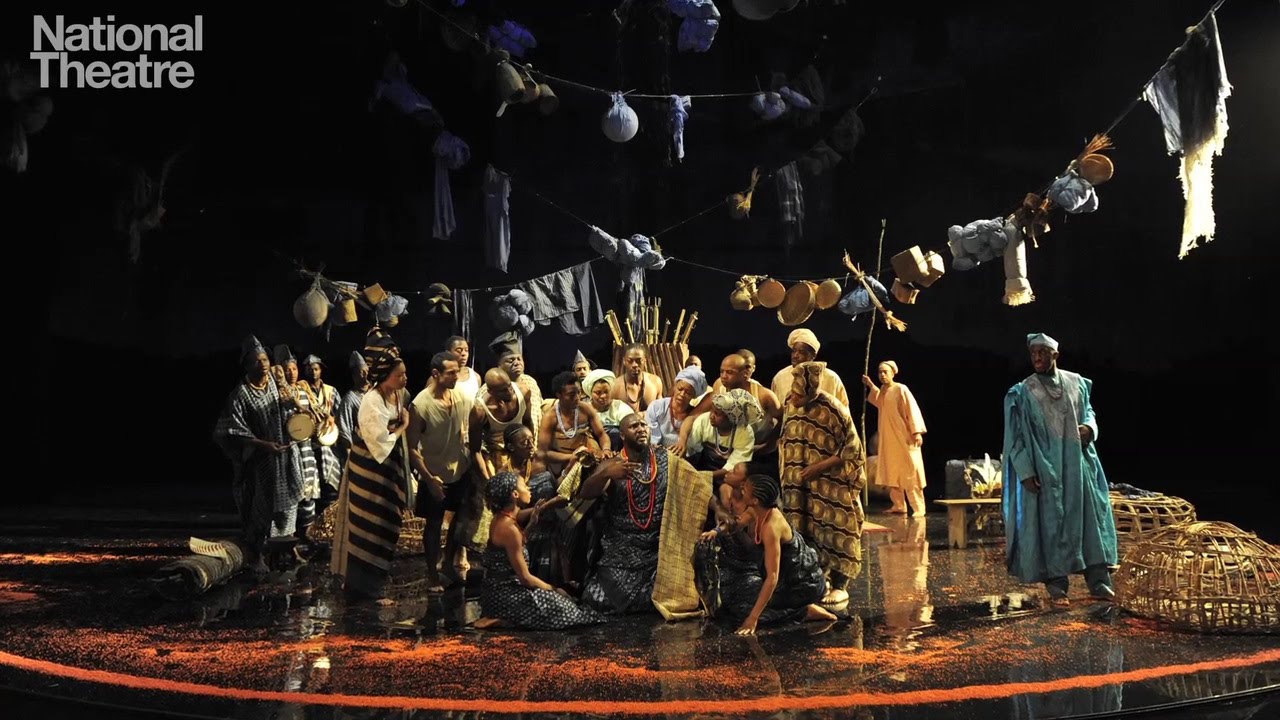
"The approach has been to frame the play as a ritual performed by the Yoruba story tellers," he said. "They play the black and white parts - and the bushes and at one point all the windows of a house."
However, the idea of white face has come into the zeitgeist more recently with productions like
Is it always inappropriate for actors to play a race other than themselves? No.
Is it always inappropriate for white actors to play any other race? No.
I don't wish to speak for anyone, but Mr. Suh (author of Jesus in India, cancelled due to white actors being cast to play South Asian characters) may disagree:
"The practice of using white actors to portray nonwhite characters has deep roots in ugly, racist traditions," Mr. Suh continued. "It sends a message, intended or not, that is exclusionary at best, dehumanizing at worst."
So...Maybe? But, no.
See, the American Theatre article makes a really interesting distinction:
Color-blind vs. Color-conscious
Color blind is what theatre has been doing for centuries and falls into the category of what Mr. Suh calls "ugly, racist traditions."
It opens up roles to white performers that would traditionally go to non white performers, producing a kind of cultural colonialism/appropriation.
It is dangerous because it forces non white performers to the outer edge of "normalcy" and makes whiteness conventional.
What some call an "erasure" of non white bodies from performance, story, and therefore, life.
But, color-conscious is something new.
In SoHo Rep's An Octoroon, there are three male actors:
One white
One black
One Native American
In it they play, respectively:
The red-faced Irishman, and the fiery, noble Native American
The noble, white romantic hero and the evil, white usurping overseer
The ever-loyal Uncle Tom character and the innocent, black, boy slave
They played their roles in
red-face
white-face
black-face
They were so conscious of their race roles/choices that it physically hurt.
Because they were such a diverse cast and had made such delightful casting/design choices, the play was the most incredible piece of theatre I have ever personally witnessed.
This was a new work, devised and written by the ensemble performing it and unflinchingly talked about race and race relations (right down to the final climax, which I shan't spoil here).
But, what happens after?
Now, that the play is published and it will (deservedly) be produced by other companies?
Do they need to adhere perfectly to those casting decisions?
Are they implicitly part of the script? The text? The play? (whatever that is/means)
I do not know.
But, according to the American Theatre article that brings us to the first principle:
The first principle is the creative control of the playwright over critical aspects of their work. We stand in solidarity with the Dramatists Guild's letter in defense of playwright's right to approve changes made to their text, which includes, but is not limited to changes made to the characters' race and ethnicity
The Mountaintop (a play about Rev. Dr. Martin Luther King Jr's last night on earth)
and The Motherfucker with the Hat
The controversial casting in all these cases favored white actors:
Three South Asian characters were cast by white/mixed race actors
Dr. King was cast as a white actor
The lead Puerto Rican characters were cast with white actors
Two out of three of these productions were cancelled and none received explicit permission on the part of the author to produce these works in this way.
Mr. Suh released a brilliant statement in defense of the action taken:
"On November 9, after confirming that a fully executed license agreement did not exist, I sent an email to [ ] insisting that she either recast, or cancel the production. I absolutely understand that this has caused anger, confusion, and disappointment among the actors and crew that had been hard at work on the piece. I do not take that lightly. The students are victims, and the timing of this mess has raised many questions. But the timing was never in my control."
"Control" is the word used.
What is and is not within the control of the creators of a piece?
"Play licenses clearly state that 'no changes to the play, including text, title and stage directions are permitted without the approval of the author' or words to that effect. Casting is an implicit part of the stage directions; to pretend otherwise is disingenuous" (link)
So everything within a given script:
This.
Cannot be changed without the express, written permission of the author.
What about concept?
Directorial vision?
"It has been the norm in the theatre (American theatres, at least) that the intentions of the creators trump the vision of the director unless the work is in the public domain." (link)
So no matter what author trumps other artists.
And that may be fair.
Because of this:
"Playwrights own our material. We are protected by copyright; in fact, we have sacrificed a great deal for the privilege of authorial ownership, most notably the right to unionize. We have foregone equitable compensation, health and pension benefits, and the right to collectively bargain. But in doing so, we have retained the hard-won right to protect the integrity of our work. This includes approval of all creative elements, including the cast." (link)
So playwrights sacrifice a lot in order to control their material.
But, if you look at the cases at Clarion, Kent State, and Hartford's TheaterWorks...
Clarion and Mr. Suh had a fundamental disagreement, but at least they could discuss.
The director of the piece a Ms. Michel stated:
"Had I been able to have a conversation with him, I would've quickly understood his views and we could've either come to a consensus or I would not have done this play." and "We are a small state school in western Pennsylvania, and trying to bring cultural diversity here is challenging, i still believe what we did with this play was beautiful. It's very unfortunate people won't be get to see it. [sic]" (link)
They weren't able to communicate in time.
Even Mr. Suh acknowledged it.
Not enough time. Not enough communication.
This is difficult enough.
But, what of the conversation that never gets had: that of the audience and the play produced.
This was done in order to engender conversation about race relations.
I suppose they succeeded.
But, the playwright feels wronged, a distortion of the play, which is unfortunate.
So what is to be done?
According to Dramatists:
"Directors who wish to dramatically reimagine material can choose from work in the public domain. But, when a play is still under copyright, directors must seek permission if they are going to make changes to the play, including casting a character outside his or her obvious race, gender or implicit characteristics. To do so without meaningful consultation with the writer is both a moral and a legal breach."
Okay.
So only works in public domain can be utilized?
Fair enough.
Except for one or two snags:
Mainly copyright and its terms.
See every time Disney is about to lose Mickey:
They throw a huge fit and this happens:
For those who are curious, these are the various acts that extend copyright.
Originally copyright worked a lot like patents.
You make a thing, you are allowed free use of it for a limited number of years from its publication.
Then, people are allowed to make knock offs after a little while.
So if you want to know how screwed you are, take an author's life expectancy and add 70 years.
Some works are 120 years from the date of their creation.
Copyright has moved out of the hands of the authors and is now meant to ensure the livelihood of the corporations that make a profit off of their work.
Not to name names (Disney).
So all of these wonderful conversations that are happening around the country with playwrights everywhere...
They cannot be held with all playwrights who fall under the realm of copyright.
And if copyright terms keep getting extended, more and more work will be withheld from public domain.
Thus far, I do not plan on ever seeing the work of...
Samuel Beckett:
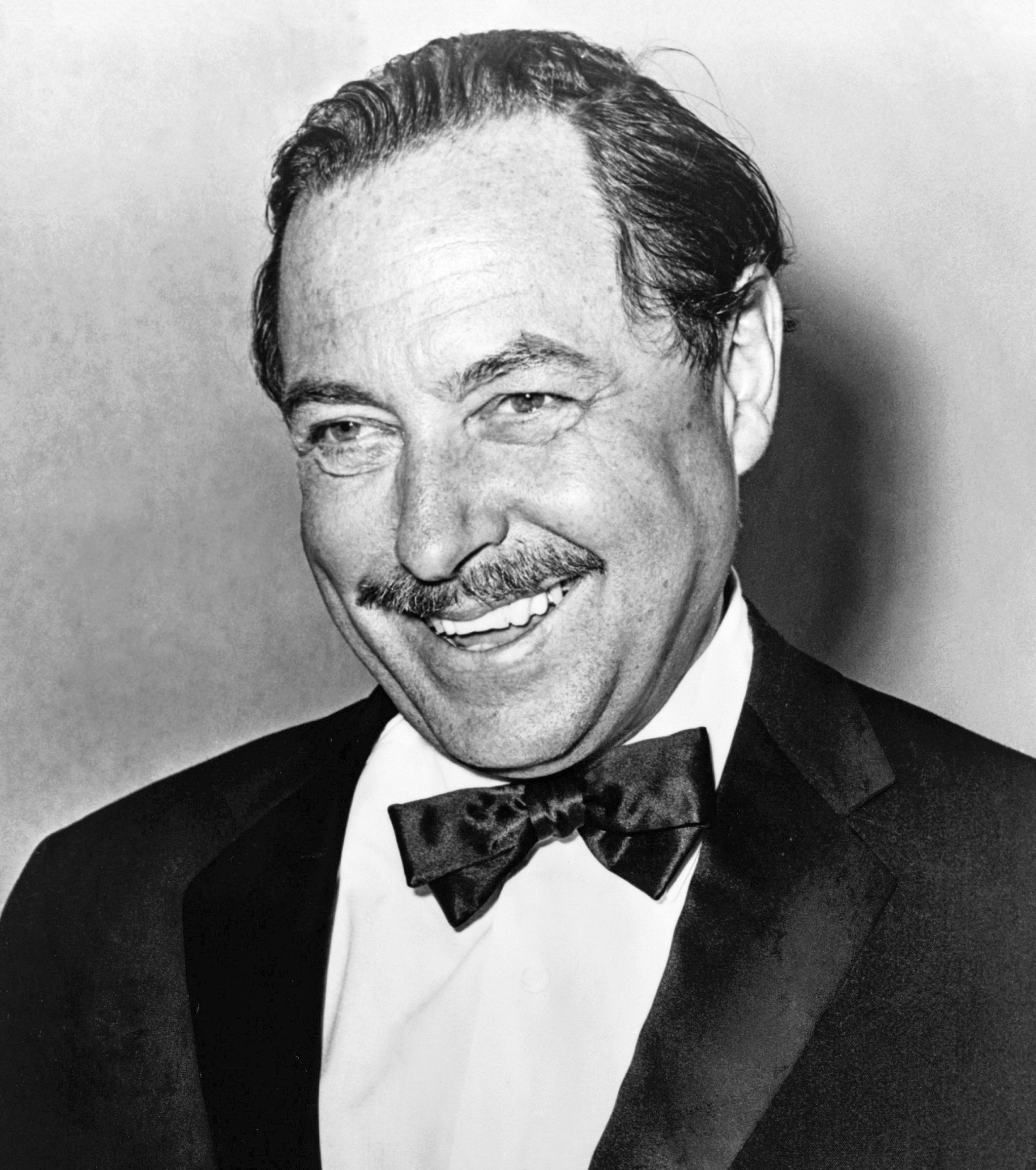
Or Tennessee Williams:
OR Arthur Miller:
Ever enter the public domain.
And that is a damn tragedy.
Because one, these brilliant playwrights are dead, and two, their work can never be questioned.
It will forever be preserved by their various estates and agencies under the idea of authorial authority granted by copyright and the extension of said terms till the next century (definitely in Arthur Miller's case).
Dramatists again:
"One may agree or disagree with the views of a particular writer, but not with his or her autonomy over the play."
Well, sure.
But, what about the dead ones?
What autonomy is left to them?
I don't want to rail anymore on copyright or its ludicrousness, but this is the sole point on which I disagree with the American Theatre article:
If playwrights have absolute autonomy about all decisions to change their crafted text, then, copyright can and should end at the cessation of their life because who are we to ask about authorial intent besides them?
How can we pretend that copyright solely protects the author when all work published after 1923 and unpublished work after 1896 remains irrevocably under lock and key?
I do not wish to do away with copyright, but its logistics confound me.
This conversation is important because it is about racial bias, the erasure of non white bodies
But it is also about the amount of power and control playwrights wield in this country.
Control over the various productions of their show whilst they live and to our detriment after their demise.
Here is a photo of Shakespeare's a Midsummer Night's Dream:
Awful lot of asses up here.
(it is a joke, but the point stands: not a single lady up there. Let us not forget that theatre has also been a male's game and not just a white one. More ladies!)